If you missed the event, sign up to watch the recordings from the livestream.
Models are converging on capability and falling in price. What sets enterprises apart is not how much context they have. It is whether that context builds over time.
Each workflow, decision and artifact saved in the Teamwork Graph should make the next decision cheaper, faster and better informed.
Atlassian's bet is that this compounding context, not the model itself, is the durable moat.
In Atlassian's own tests, agents connected to the Teamwork Graph gave answers that were 44% higher in quality and used 48% fewer tokens. With the right context, agents spend less time searching and retrying.[1]
The Teamwork Graph is getting richer[2]:
The more of your organization it holds, the more each new piece of work is worth.
According to Atlassian's research, 85% of knowledge workers use AI, yet only 6% of executives can point to clear, organization-wide ROI.[1]
Atlassian's answer is a Forward Deployed Engineering program, which is for Atlassian's largest accounts. Senior AI engineers embed with a customer for 12 weeks to build custom Rovo agents, connect systems, and automate workflows. Engaged accounts are seeing 50% higher AI adoption.[1]
That matches ServiceRocket’s observations. People who know the customer's data, workflows and Atlassian setup are the ones closing the gap between using AI and getting value from it.
These people can decide who owns each agent, what it can access and what it is allowed to do. These answers are specific to each organization.
Whether expertise comes from Atlassian's program or from a partner who has worked in your instance for years, buying the tools is the easy part.
In the agentic era, governance and hands-on expertise are the work.
The headline launch was the Agentic Multiplayer Protocol. Today, most work with AI agents happens one-on-one, tucked away in a browser tab or terminal. AMP is the layer that lets agents work alongside human teammates in Jira, Confluence and Loom. Model Context Protocol (MCP) is how an agent acts; AMP is who is allowed to act.
Under AMP, every agent has a clear owner, its own identity and permissions, and a full audit trail. Admins can now set basic access rules once. Every new Rovo agent follows those rules automatically, so there is no need to set up each agent separately.
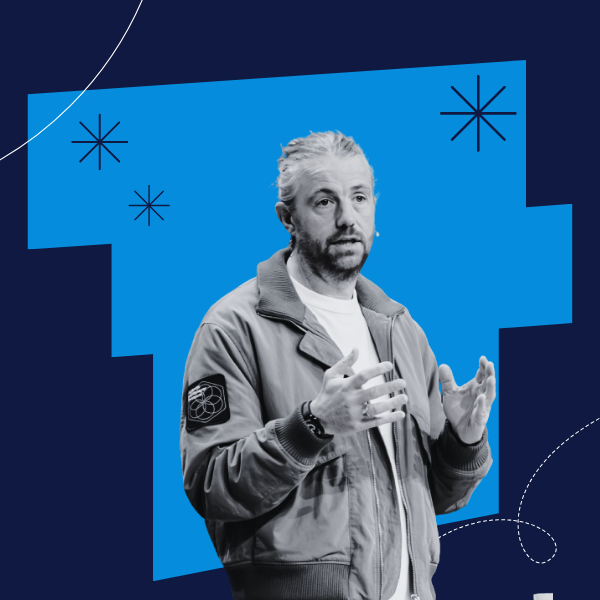
The Founder Keynote showed what this looks like in practice. Agents could work directly on a Jira board, side by side with the team's own work items. If an agent starts work before the work item exists, the session can be dragged onto the board. Jira then creates the work item automatically.[3] The demonstration made the word “multiplayer” concrete: agent work becomes visible, owned and auditable in the same place as human work.
Model Context Protocol (MCP) is the standard way AI tools connect to other apps. Atlassian rebuilt its MCP server from scratch. It grew from dozens of tools to more than 200, covering most Atlassian apps, including Forge and Marketplace apps.[2] Exposing 200 tools flat would bloat every prompt, so the server sits them behind a discover-then-execute layer: the agent describes the goal, gets the exact operation, and runs it.
The practical result: the AI tools your team already uses can do a lot more inside Jira and Confluence, while still running under your permissions.
Rovo Work is a new mode in Rovo Chat for tasks that take several steps. A user tells Rovo what they want done, Rovo suggests a plan, the user tweaks and approves it, and Rovo gets to work across Jira, Confluence and other connected tools. Humans approve the plan before any work starts, so they stay in charge.
There are also a rebuilt Rovo desktop app and a new Rovo mobile app: Rovo now comes with you wherever you work.
European customers got the announcement many have been waiting for. Data residency already keeps your Atlassian data in Europe. EU AI inference extends that to AI: when Rovo works on your data, the question, the context and the answer all stay within the EU.[3]
Atlassian also previewed new scanning features in Atlassian Guard Premium to cover agent activity alongside user activity.
A practical note for admins: Rovo credit overage billing starts on Dec 3, 2026. Before then, check which agents and users are using credits and set budget alerts. That way, the first overage bill will not be a surprise.
Enterprises are creating more with AI: plans, reports, prototypes, internal tools. As the volume of artifacts grows, it gets harder to track it all and keep it secure. Atlassian Artifacts gives each one a permanent link with permissions like the Confluence or Jira it lives in. These Artifacts can be dropped into Confluence, Jira or Slack, and are searchable. This way, AI outputs stop disappearing into chat history. It is in beta on all paid plans.
The Strategy Collection's updates make it even better at connecting high-level goals to daily execution (all in open beta):
Loom introduced new features that make it faster to share and document work:
New features cut down on admin work for IT and service teams:
ServiceRocket’s CEO and founder, Rob Castaneda, put it simply: AI needs organizational context to do great work.
The Teamwork Graph supplies the systems side of that context. The other side lives with people: the teams who know why a workflow looks the way it does, which customer needs what, and who to call when something breaks.
That kind of context is not set up once. The business keeps changing, and so does people's understanding of it. That is why this context takes years to build and is carried with the people closest to the work.
That is why, during Team '26 Europe, ServiceRocket celebrated several Impact Award-winning customers and partners. (View the full list of this year's winners.) Every one of those awards is a relationship built over years, and every one of those relationships is context that no connector can ingest.
Connect with our experts today and gain valuable insights tailored to your needs.
Team '26 Europe made one thing clear: the next wave of AI value belongs to organizations that get their context right, both in their systems and in their teams.
With ServiceRocket’s expertise, you not only implement AI; you optimize your enterprise with it. #WeGotYourBack