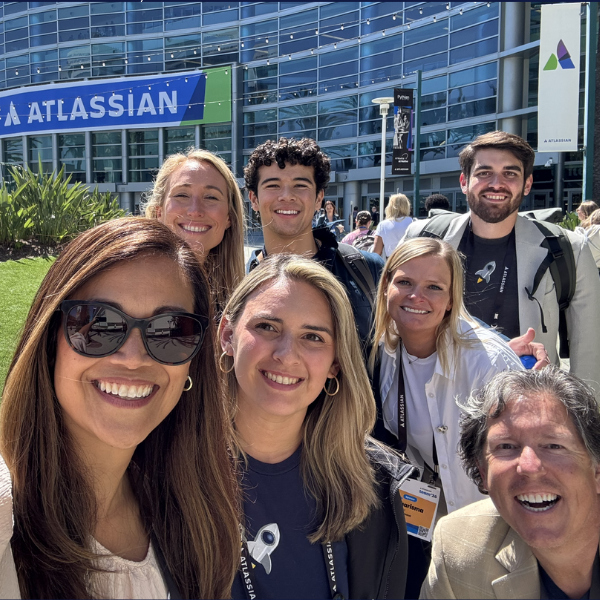
At Atlassian Team ’26 on May 5-7, 2026, in Anaheim, California, the conversation among enterprise leaders has officially evolved from "We need to implement AI" to "How can humans and AI collaborate at scale?" The focus is now on the birth of the “AI-native organization”, where humans work with a team of autonomous agents to execute an enterprise’s vision.
"We're standing at the edge of one of the most significant reimaginings of work in our lifetime. Today isn't just about software. It's about the birth of a new species: the AI-native organization." — Mike Cannon-Brooks, Atlassian CEO and Co-founder.
Atlassian’s latest updates center on connecting people, Rovo AI agents, work and code across an entire ecosystem by providing the "nervous system" (the Teamwork Graph) to make this happen.
During the keynote, Mike Cannon-Brooks held several live demos to illustrate the Teamwork Graph's capabilities. In one live demo, he showed how Rovo can quickly put together a report from Atlassian’s institutional knowledge; an especially important feature when you’re pressed for time.

He had Rovo create a detailed report of ServiceRocket. As the relationship spanned more than 20 years and involved tens of thousands of interactions across Salesforce, Confluence, Jira, Loom and more, Rovo found and queried 61 sources across Atlassian’s Teamwork Graph. Yet, in roughly three minutes, it built a real-time intelligence dashboard for the two-decade partnership—complete with charts, open opportunities, meeting details and account history.
The live demo was proof that the Teamwork Graph is ready for enterprise-scale institutional memory.
If enterprises seize the opportunity to modernize their System of Work, they can turn their institutional memory into a valuable asset, build Human-AI teams and gain a competitive edge.
The updates announced at Team’26 significantly improves Atlassian's System of Work and enables a new way of working in the age of AI agents. Here are the opportunities that enterprises can seize with these updates:
Mike Cannon-Brooks emphasized that in 2026, raw intelligence is a commodity; the true differentiator is an organization's unique context. In other words, while every company now has access to the same powerful AI models, what sets teams apart is how well AI understands their projects, processes, people and other institutional knowledge.
To be an AI-native organization, enterprises must re-architecture how work is assigned and executed. With Atlassian Rovo AI integrated into the daily flow of work and the Teamwork Graph forming the “nervous system” of data for every enterprise, Rovo agents will be able to orchestrate complex tasks and free humans to focus on high-value strategic work.
Enabling tools and updates:
These updates turn AI agents into "first-class teammates" within Atlassian instances:
Aligning business strategy with technical execution has historically been manual and error-prone. The latest updates automate this alignment by using the Teamwork Graph to create a living map of how every task contributes to a primary goal. This gives leaders a transparent line of sight from quarterly OKRs down to individual tasks.
Enabling tools and updates:
In the AI-native era, service management moves beyond reactive ticket-taking to proactive system health. When an incident occurs, AI-driven agents proactively identify root causes across logs and deployments, allowing teams to resolve issues an average of 55 minutes faster.
Enabling tools and updates:
Atlassian Team '26 has made one thing clear: the future of work isn't about humans vs. AI, but about the seamless orchestration of both. When enterprises centralize context within the Teamwork Graph, they enable Rovo AI to automate complex tasks, surface insights, improve engineering productivity and finally minimize tool sprawl.
ServiceRocket is already putting this into practice in its daily operations.
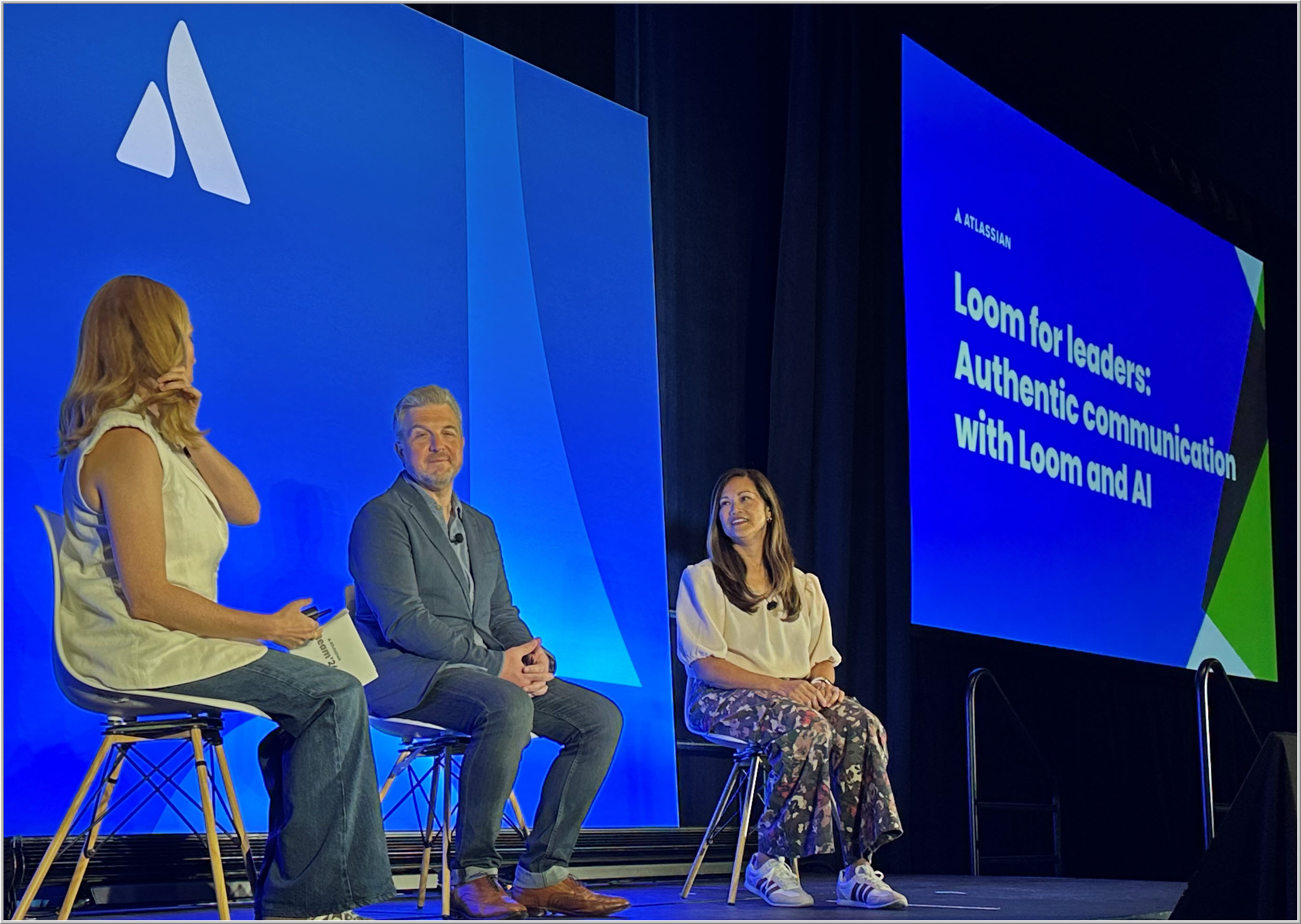
At Team ‘26, ServiceRocket COO Colleen Blake joined leaders from Reddit and Atlassian on the "Loom for Leaders: Authentic Communication with Loom and AI" panel, sharing how ServiceRocket uses Loom’s videos as a currency of trust with employees across 11 countries and 18 nationalities.
"We as leaders are the eyes and ears for everyone else — Loom enables that," said Blake, describing how she filmed the Team '26 customer appreciation dinner so 300 rocketeers around the world could "take a seat at the table with us.".
Instead of static text, video comes with emotional and situational context that prevents the "broken telephone" effect across distributed teams. On top of that, every video recorded also adds to the institutional memory that fuels Rovo AI.
For ServiceRocket Founder & CEO Rob Castaneda, the developments at Team '26 unveil a future that is incredibly bright and exciting.

“The pattern I'm seeing is clear: methodology and structure, accelerated by AI. Every company has this giant conveyor belt, and through MCP and the Teamwork Graph, AI is connecting in and out of it. The discipline to structure and think through things properly — that's what's going to rise."— ServiceRocket Founder & CEO Rob Castaneda
What is an "AI-native organization" according to Atlassian?
It is a business where humans orchestrate a team of autonomous agents. The agents handle execution at scale; they are powered by a unified "nervous system" of data.
Why should my enterprise become an AI-native organization?
Becoming an AI-native enterprise is an exciting opportunity to free your human employees to focus on strategic and critical work, leaving AI to execute everyday and repetitive tasks. This accelerates innovation and drives business momentum.
Is Atlassian Rovo AI available now?
Yes, many features of Rovo, including Rovo Chat and Agents in Jira, are generally available. New features like Code Intelligence are in early access.
How does the Teamwork Graph save money on AI?
By providing precise context via the CLI and MCP, agents use significantly fewer tokens to get higher-quality answers—benchmarked at up to a 48% reduction in token costs.
Can I use Atlassian Rovo AI with non-Atlassian tools?
Yes. Through the MCP server and new connectors, the Teamwork Graph can surface context in apps like Figma, Slack, GitHub and even Google Drive.
How does Atlassian handle AI security?
Through Atlassian Guard, which blocks sensitive data from reaching models and ensures AI follows the same permissions and data residency rules as human users.
Can Rovo understand my source code?
Yes. The new Code Intelligence skill semantically indexes billions of lines of code across Bitbucket and GitHub to answer complex architectural and technical questions.
How do I get started with the Teamwork Graph?
You can visit Atlassian Teamwork Graph website to explore your organization’s existing graph.
How can my enterprise become AI native?
Atlassian has a robust, decades-long partner ecosystem and community you can rely on as you make this transition. As a Platinum Solution Partner with over 20 years of Atlassian ecosystem expertise, ServiceRocket can help enterprises implement and enable this transition strategically.
Connect with our experts today and gain valuable insights tailored to your needs.
Bring humans, AI agents and automation together. As an Atlassian Platinum Solution Partner with over 20 years of Atlassian ecosystem expertise, we have decades of experience implementing solutions that bring real results to enterprises, including AI teammates in enterprise workflows.

Connect with our experts today and gain valuable insights tailored to your needs.
Bring humans, AI agents and automation together. As an Atlassian Platinum Solution Partner with over 20 years of Atlassian ecosystem expertise, we have decades of experience implementing solutions that bring real results to enterprises, including AI teammates in enterprise workflows.