There's a question most department leaders don't ask out loud but think about constantly: Why does everything take so long?
The strategy update that requires a 45-minute all-hands. The performance review cycle that eats two weeks. The onboarding process that ties up senior people for days. The cross-timezone standup that's convenient for exactly one time zone.
For many enterprise leaders, the old ways of working and communicating with teams need an upgrade.
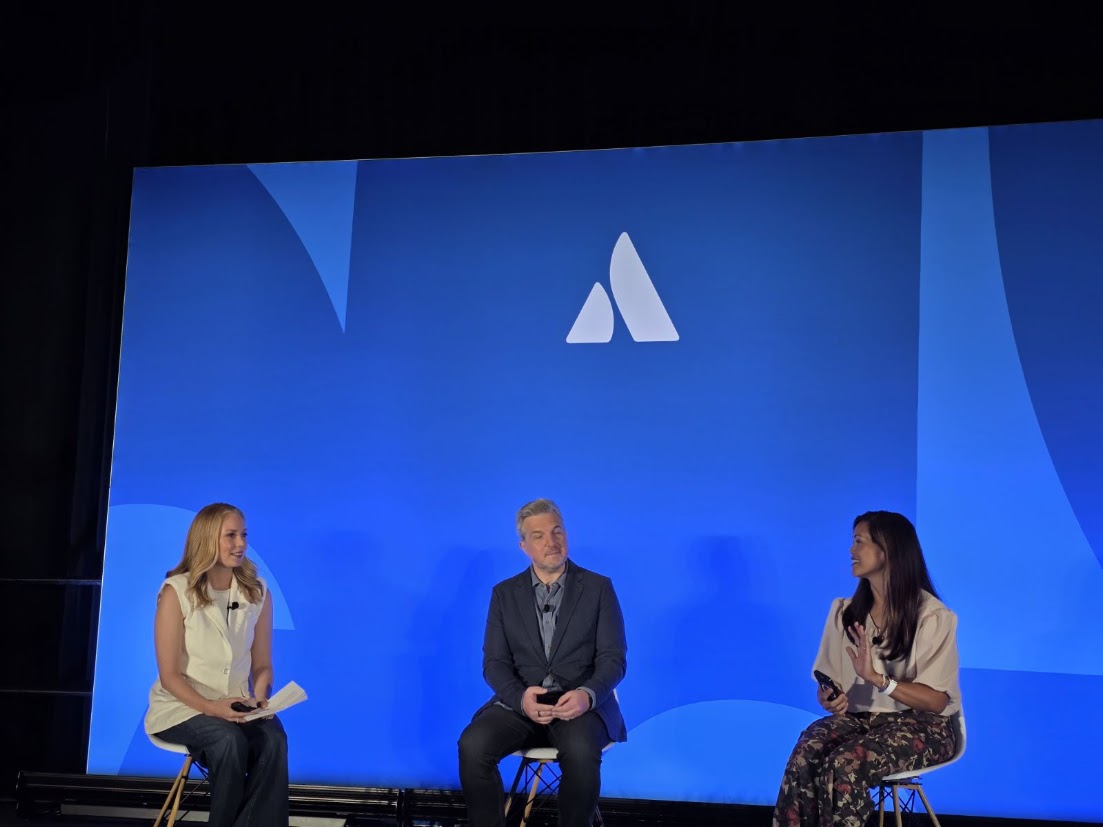
At the Team ’26 Loom for leaders: Authentic communication with Loom and AI panel on May 7, ServiceRocket COO Colleen Blake joined Reddit’s Deputy CISO and Head of Corporate Engineering, Sean Joerg and Atlassian’s Head of the Teamwork Lab, Molly Sands, to share how ServiceRocket has fundamentally changed the way they communicate with their teams. They question when a meeting is actually necessary and what to do instead.
The results at ServiceRocket? Over 12,700 meetings eliminated, 55 minutes saved per employee on training alone and a team across 11 countries that feels more connected.
The real cost isn't the meeting. It's everything around it.
A "quick sync" is not really "quick". There's the scheduling, the time zone negotiation and then there’s the context-switching for everyone who joins.
Colleen shared that at ServiceRocket, Loom's async video is used for one-directional communication such as updates, strategy shares, walkthroughs and feedback. Meetings are reserved for real-time discussions such as making decisions, brainstorming or relationship-building.
"Asynchronous collaboration and communication are important, especially for us," Colleen said. "We're in 11 different countries. I don't know how many different time zones. Someone's always on.”
Colleen described her communication philosophy as "working out loud" or making your work visible so that anyone, whether they're in ServiceRocket's Malaysia office or in Santiago, can access it and collaborate on their own schedule.
For example, when ServiceRocket hosted a customer appreciation dinner for 53 people during Team '26, Colleen recorded a quick video for the rest of the 300-person company so that they could “take a seat at the table with us from around the world."
"We as leaders are the eyes and ears for everyone else and Loom enables that for us," she said.
This is a mindset shift: From "Who needs to be in this room?" to "Who would benefit from seeing what just happened?" Loom makes this effortless to share.
It also changes how leaders think about audience. As Colleen put it: "Are you communicating one-to-one, to few, or one-to-many? Depending on which category or audience type you're speaking to, you have to have a different approach."
Colleen also shared how ServiceRocket has woven async video into the entire employee journey—what she calls the "hire to retire" lifecycle. Loom makes onboarding, training and performance reviews a breeze.
"The training aspect is also a big productivity boost for us," Colleen added. "Saving 55 minutes per employee of training because we get those bite-sized Loom consumption happening as you need it."
Loom also breaks down barriers, said Colleen. "Especially if you are a vocal processor like me. I'd rather just have a conversation, talk it through, talk out loud."
A recurring theme during the panel was the idea of "talking first and structuring later."
Instead of starting with a blank document, you talk through your ideas with Loom. Then, you use the AI-generated transcript to organize your thoughts into a clear document.
Colleen's team uses this method. A conversation or video becomes a transcript, which becomes a structured Confluence document and finally, actionable tasks in Jira. The thinking stays human, but the formatting becomes automatic.
The best strategic thinking is probably happening in conversations, on a walk, in the middle of something else. We can now capture these thoughts by talking and then letting AI handle the structure.
When asked about impact, Colleen pointed to how unnecessary friction simply disappears.
"Speed. Everything is faster now," she said. "Our marketing team has saved over 12,700 meetings because of Loom. So you get time back."
Those meetings represent thousands of hours returned to people who can now spend that time on real work.
Colleen's advice for anyone who hasn't started: "Just press record. Just take that one idea and go for it. You don't have to have a full thought-out presentation with talking points. The whole point is in the moment: that raw, authentic connection that you can make with the team."
She shared how ServiceRocket's Founder and CEO Rob Castaneda often shares Loom videos with the whole company. At Team '26, he was doing daily updates in front of the convention center, just talking about what he heard yesterday and what's on his mind today.
"I think the more that leaders are making themselves vulnerable to showing their raw, unpolished selves, the more that your teams will feel comfortable in adopting this method of communication."—ServiceRocket COO Colleen Blake
If you're feeling the drag of too many meetings, slow knowledge transfer and communication that doesn't land, the fix isn't a better calendar tool or another project management layer.
It's rethinking which of your communications actually need to be synchronous, and finding a faster, more human way to handle the rest.
At ServiceRocket, Rocketeers are utilizing Loom for asynchronous communication and updates, reserving meetings for what truly needs them and using AI to turn conversations into structured, actionable output.
The technology enables it. However, the real shift is when leadership decides, "I'm going to communicate more openly, more often, and stop making my team wait for a meeting to hear from me."
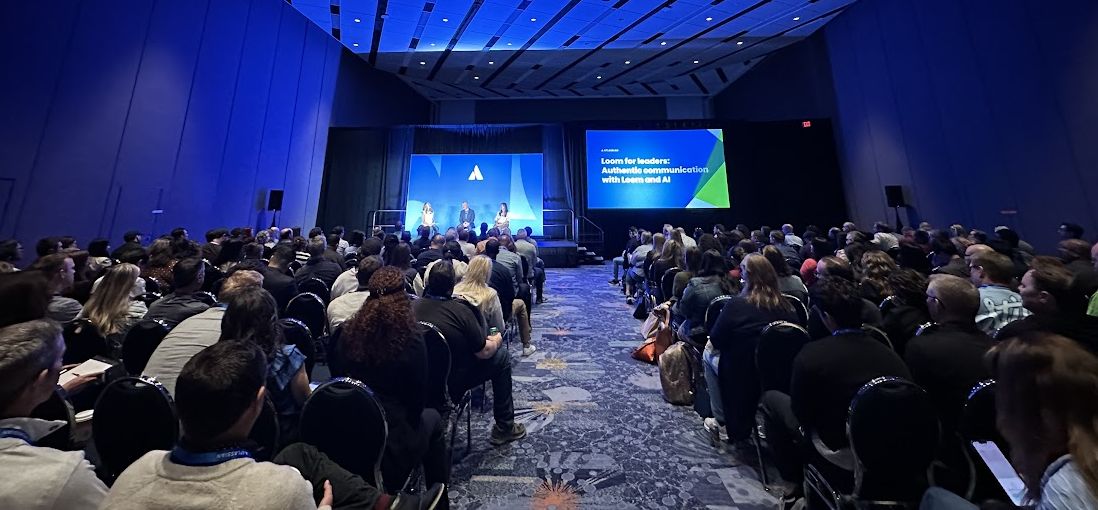
At the panel, Colleen, Reddit’s Deputy CISO and Head of Corporate Engineering Sean Joerg and Atlassian’s Head of the Teamwork Lab Molly Sands shared many ideas on how enterprises can use Loom: