At ServiceRocket's Kuala Lumpur executive roundtable, From Waterfall to Agile: Modern Ways of Working in Malaysia, ServiceRocket experts shared how Malaysian tech leaders could solve work friction through intentional design and Atlassian-powered visibility.



At ServiceRocket's Kuala Lumpur executive roundtable, From Waterfall to Agile: Modern Ways of Working in Malaysia, ServiceRocket experts shared how Malaysian tech leaders could solve work friction through intentional design and Atlassian-powered visibility.
Many Malaysian enterprises work within a hybrid of Waterfall and Agile methodologies, often by accident rather than design. This "accidental hybrid" model frequently creates friction between rigid governance and the need for speed. Without an intentional System of Work, disconnected teams and fixed budgets can stifle the very agility that leadership seeks to cultivate.
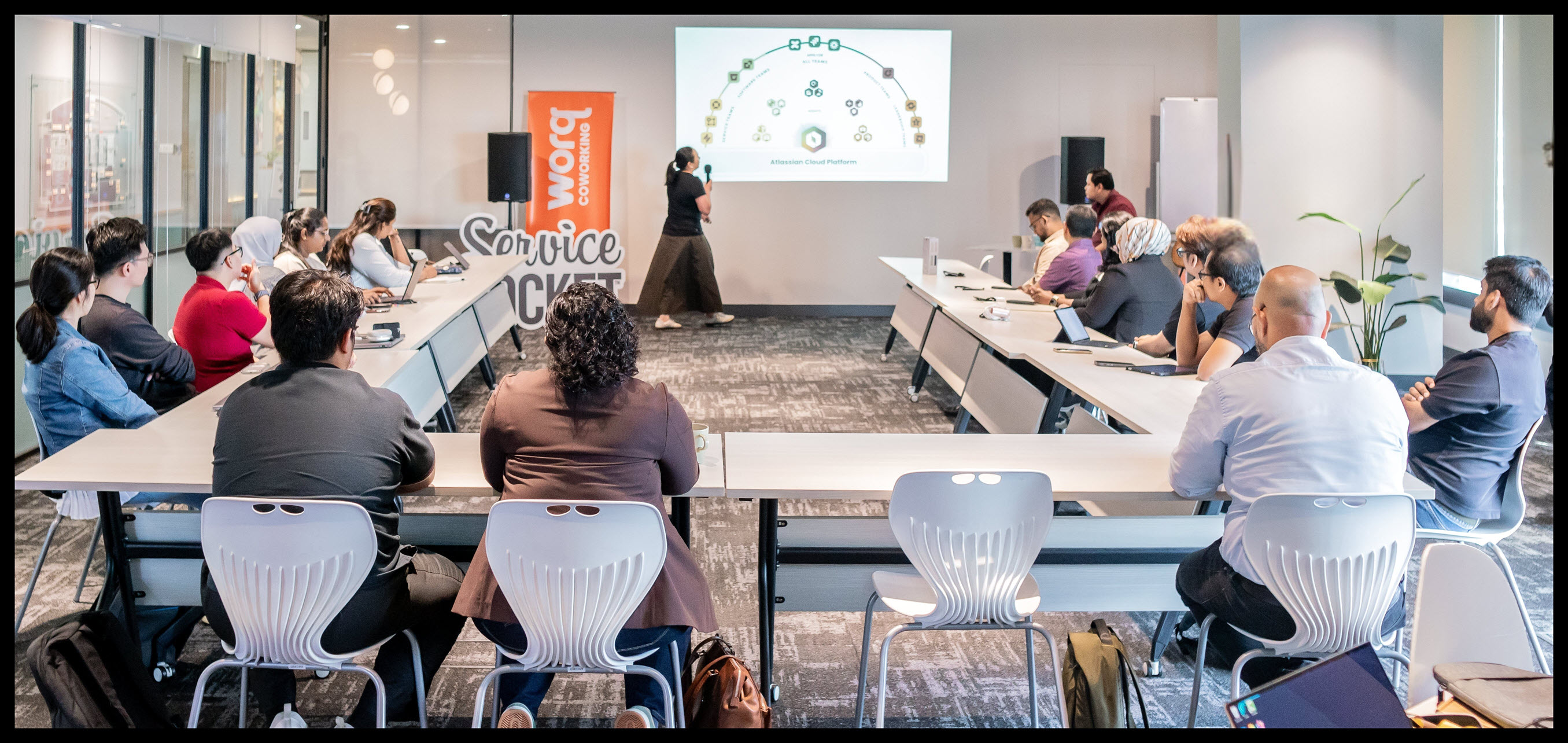
During ServiceRocket’s Kuala Lumpur executive roundtable, "From Waterfall to Agile: Modern Ways of Working," Belinda Tee, ServiceRocket's Director of Solution Architecture, spoke with 17 Malaysian executives and IT leaders about the friction points inherent in their systems and what to do about them.
The most common pain points highlighted by the attendees was the lack of real-time visibility, which made it almost impossible to know the exact statuses of projects. If there were any updates, they were vague, lacked details and as a result, risks remain hidden until they cause delays or derail the project completely. On top of that, teams are burdened by manual work, such as pulling data from disparate sources once a month to build a presentation for leadership.
Belinda recounted a "lightbulb moment" from a recent strategic review with an enterprise customer. During a quarterly planning session, improved data transparency revealed that the company had over 30 "critical zero" issues.
"When everything is a 'critical zero', nothing is actually a priority. This 'urgent culture' doesn't produce results; it paralyzes them," says Belinda.

Belinda explained that friction points like these are common in organizations that lack a unified methodology of work.
"When information is pulled from a mix of Agile and hybrid teams without consistent governance, leadership finds it difficult to track actual progress," she said.
Juggling multiple work systems creates a significant mental load for teams. These inefficiencies hinder effective strategic planning, leading to budget overruns and an inability to adapt quickly to a fast-paced marketplace.
The solution is to work in a connected System of Work supported by a single platform, such as in Atlassian's Teamwork Collection (which includes Jira, Confluence, Rovo AI and more). This platform can capture data and knowledge, automatically surface project statuses and dependencies by pulling data into dashboards and utilize AI to surface insights.
However, true agility requires more than just adopting tools. Enterprises must adopt new habits to align people and processes. A modern System of Work allows an organization to:
To make this modern system a reality, a platform must support shared identity, data, and services across different teams. Executing this is a complex task, but Belinda offered some advice for enterprises beginning this transition:
They are about reducing friction through intentional design and connected data.
By moving away from an "accidental" model and toward a designed System of Work, enterprises can finally bridge the gap between business strategy and technology delivery.
Connect with our experts today and gain valuable insights tailored to your needs.
Transitioning to a modern System of Work is a complex but necessary evolution. As an Atlassian Platinum Solution Partner, ServiceRocket will conduct a strategic review to identify friction points within your enterprise's unique environment and get your team up to speed with modern ways of working.

Connect with our experts today and gain valuable insights tailored to your needs.
Transitioning to a modern System of Work is a complex but necessary evolution. As an Atlassian Platinum Solution Partner, ServiceRocket will conduct a strategic review to identify friction points within your enterprise's unique environment and get your team up to speed with modern ways of working.